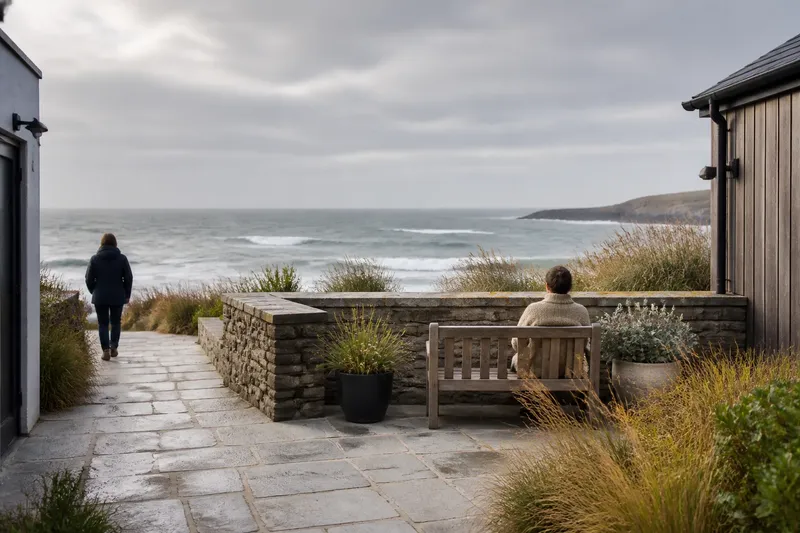
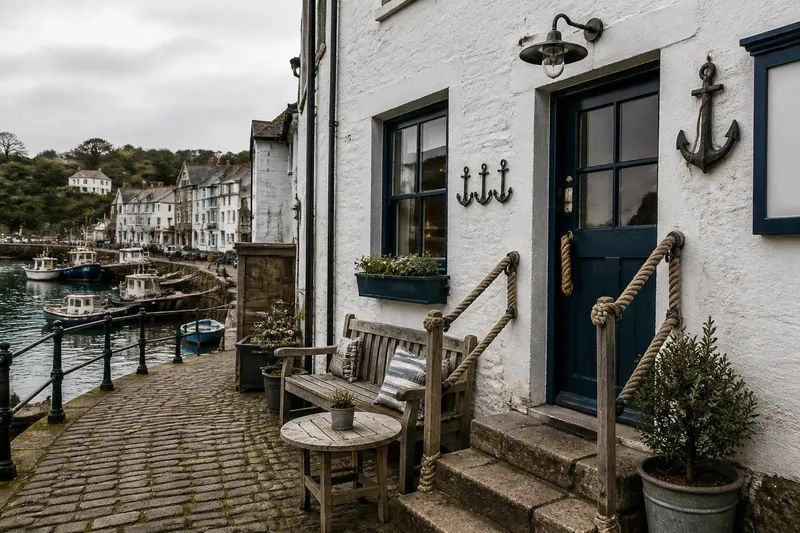
Weathered Timber or Painted Metal for a Shore-Side Bench?
Compare weathered timber and painted metal for a shore-side bench, with clear upkeep considerations to help match its look and care to the setting.
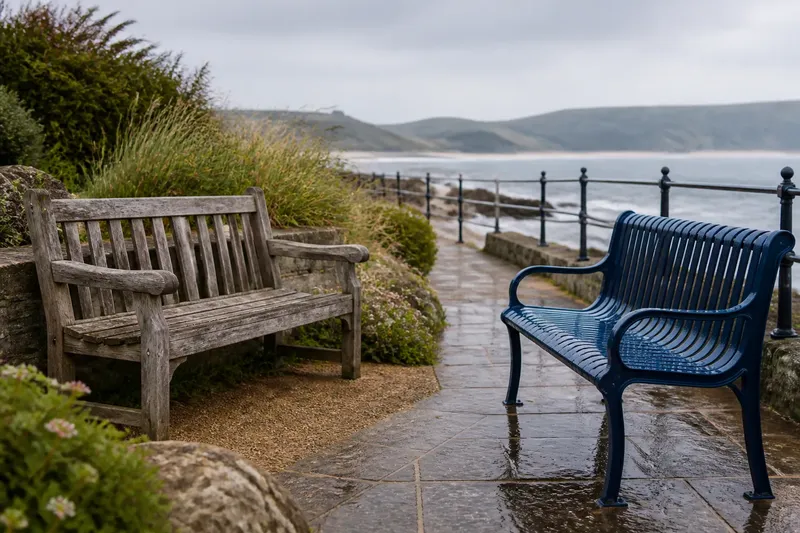
Which material is easier to live with beside the sea: weathered timber or painted metal? For a shore-side bench, the answer depends less on a universal winner than on how exposed the seat is, how it will be used and who will look after its finish.
Timber brings grain, warmth and a surface that changes visibly with time. Painted metal gives a more uniform colour and a defined shape, but its coating asks for attention where it gets chipped or worn. The useful choice is the one whose ageing and upkeep suit the particular corner of the coast.
Start with the bench’s exposure
A bench under a deep canopy or against a sheltered wall has a different daily life from one facing open sea spray. Salt-laden air, rain, sun and wind can reach the latter from several directions. A nearby path may also carry grit onto the seat, while damp planting or a hedge can slow drying.
Look at the exact position at different times of day. Notice whether rainwater drains away, whether the seat stays shaded and damp, and whether spray reaches it directly. Exposure does not settle the decision by itself, but it tells you which signs of wear are likely to matter most.
In a sheltered spot, the material’s appearance and feel may take priority because upkeep is less demanding. In an exposed place, consider how readily you can inspect the surface and arrange care. A finish that needs attention but is difficult to reach can become an awkward design choice, however handsome it looks on opening day.
Choose timber if visible ageing belongs in the setting
Weathered timber suits a bench that should feel connected to boardwalks, dunes, old garden furniture or a modest seaside shelter. Its grain breaks up a long surface, and changes in tone can sit comfortably beside stone, sand-coloured render and planting. The result is not a fixed colour sample; it is a material whose appearance shifts as it is exposed.
That change can be welcome if the design allows for it. Some people like the softening of colour and the small marks of use; others want the seat to remain visually even. Timber also varies from board to board, so a restrained, natural finish is usually easier to accept than an expectation of identical surfaces throughout.
Upkeep depends on the timber species, its finish, its construction and the maker’s care instructions. A penetrating oil, a surface coating and untreated timber do not call for the same maintenance. Inspect for splinters, loose fixings, rough edges and areas that remain damp, and consider whether the chosen finish can be refreshed without making the bench look patchy.
Timber is a good fit where a tactile, less formal appearance matters and a caretaker can keep an eye on the surface. It may be less suitable where users expect a consistently smooth, uniform finish but no one is available to maintain it. The word “weathered” describes a look, not an exemption from care.
Choose painted metal if a clear colour and crisp outline matter
Painted metal suits a bench intended to read as a deliberate, clearly coloured object. It can provide a clean contrast against pale paving or dark planting, and its edges can look neat in a formal garden or along a built promenade. A restrained colour can also help the bench sit quietly rather than imitate nautical decoration.
Its visible condition depends on the coating as much as the metal beneath it. Scratches at corners, contact points or fasteners can interrupt the colour and expose areas that need attention. In a salty, damp location, small defects are worth noticing before they spread; the appropriate response depends on the coating and manufacturer’s guidance.
Painted metal can be the better fit where a consistent colour is central to the design and someone can inspect the finish periodically. It is a less comfortable choice if the bench will be knocked frequently and no maintenance arrangement exists. A chip on a timber seat may blend into a varied surface; a chip in a smooth painted finish tends to announce itself, rather like a missing button on a plain coat.
Metal may also feel cooler or warmer to the touch depending on shade, sunlight and local conditions. A bench with timber slats and a painted metal frame can divide these qualities, though its joints and transitions then need to be considered as part of the upkeep. The right choice is not always a single-material choice.
Match the material to the people who use it
For a quiet garden seat used by a household, timber may be appealing if a slightly changing surface is welcome and care can be shared. For a public bench beside a promenade, painted metal may suit a strong colour scheme and a regular inspection routine. Neither setting dictates a material: frequency of use, cleaning arrangements and the desired character still matter.
Consider how people arrive at the seat. Sand, wet clothing and bags can leave different marks from occasional use in a sheltered garden. If users often sit in wet weather, ask whether the slats or seat shape allow water to drain and surfaces to dry, rather than judging solely by the material name.
For a coastal café or small visitor space, the owner may prefer a finish that can be checked as part of ordinary closing duties. A private coastal home may instead favour timber that settles into the garden. The important distinction is not private versus public, but whether the actual person responsible for upkeep can access the bench and recognise when it needs attention.
What should you ask before choosing?
Will the bench face direct sea spray?
If it will, prioritise a construction and finish intended for that exposure, and plan to inspect it. A sheltered location gives more room to prioritise texture or colour, though damp and sun still affect the surface.
Who will notice and handle small defects?
Choose a material whose early signs of wear are easy for the responsible person to spot. If no one can respond to a chipped coating or a rough timber edge, reconsider the location or the maintenance arrangement.
Does the setting call for a changing or consistent appearance?
Timber is often the more natural choice when tonal variation is welcome. Painted metal is more suited to a defined colour, provided the owner accepts that damage may interrupt that even appearance.
Can the bench be moved or reached for care?
A bench that can be accessed from all sides is easier to inspect than one tight against planting or a wall. If access is limited, choose a design and finish with that constraint in mind rather than assuming routine care will somehow happen.
Use a mixed design only when it solves a real problem
Combining timber slats with a painted metal frame can give a warmer seating surface and a crisp structural outline. It can also create more places for water, grit or debris to collect, especially around joints and end grain. A mixed bench is most convincing when each material has a clear job and the connections are straightforward to inspect.
Say you are placing a bench in a sheltered coastal garden beside a painted gate. You want the seat to feel informal, but the gate’s colour is an important part of the setting. A timber seat on a painted metal frame could answer both needs; the expected result is a softer sitting surface with a repeated colour at the base, while the owner can check the slats and frame separately.
That combination is less persuasive if no one can inspect the joints or refresh the coating. In that case, a simpler single-material bench may be easier to care for and less visually busy. Keep the design’s practical logic visible: a material should contribute more than another finish to maintain.
Make the choice that suits the actual shore
Weathered timber fits a setting where texture, warmth and gradual change are welcome, and where its surface can be checked and cared for. Painted metal fits a setting that needs a defined colour and a crisp outline, provided the coating can be inspected and small damage dealt with. A sheltered position, an exposed promenade and a busy café may all lead to different answers.
Before ordering, compare the bench’s intended finish, construction details and care guidance with the conditions at its precise location. Where the right treatment depends on the timber, coating or local requirements, follow the manufacturer’s instructions and applicable local rules. For a shore-side bench, good design is not the promise that a material will remain unchanged; it is choosing an appearance and upkeep routine that make sense together.