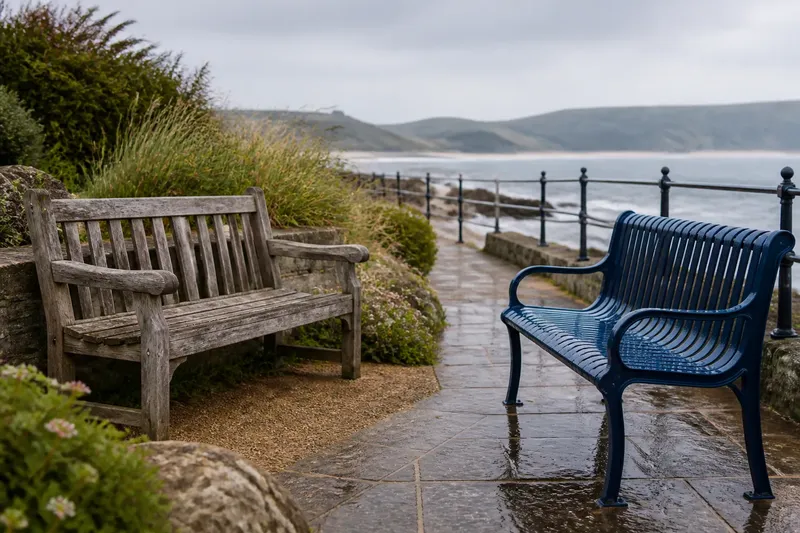
The Windbreak Wall: How a Low Edge Changes a Coastal Courtyard
A windbreak wall in a coastal courtyard can temper gusts without closing the view. Learn what to observe across a day and how to read its effects.
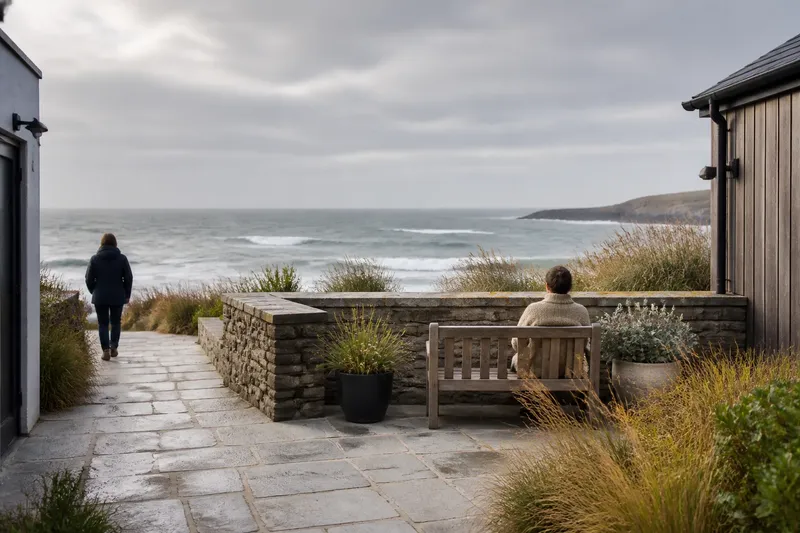
Where does the wind stop being troublesome in a coastal courtyard, and what does that low wall do to the view? A windbreak wall can take the edge off a gust, mark a place to pause and leave the horizon visible, but its effect changes across the courtyard and through the day. A short observation routine helps you see those changes before deciding whether the wall is doing useful work.
The useful question is not simply whether a wall blocks wind. It is where the sheltered patch begins, which routes people take through it, and whether the wall makes the courtyard feel open or oddly divided. A low edge is less like a lid than a book propped open: it changes what happens nearby without shutting the whole scene away.
Read the windbreak wall as an edge, not a barrier
A courtyard wall affects several things at once. Its height and length interrupt air moving across the ground; its ends let air curl around; and its position frames views from the places people actually use. The same wall may shelter a chair on one side while leaving the entrance exposed.
Start with the wall’s relationship to the courtyard rather than judging it from one attractive viewpoint. Notice the prevailing direction of the wind during ordinary use, the openings between buildings, and whether a corner or passage funnels a gust. Coastal wind does not arrive as a neat arrow on a plan; it can turn around corners and vary with the weather.
Look, too, at what the wall gives the eye. A solid, low wall may hide clutter at ground level while keeping distant water, sky or dunes in view. A gap can preserve a visual connection or become a direct wind channel. Neither effect is automatically a fault; the question is whether it suits the courtyard’s use.
Use a week to observe ordinary conditions
A week is long enough to notice routine patterns without pretending to describe every season. Choose times when the courtyard is normally occupied, and make brief notes from the same few positions. The aim is not to collect impressive data. It is to separate a recurring effect from a single blustery afternoon.
- At the start of the week: Sketch the courtyard, wall, entrances, seating and routes. Mark the direction the wind appears to come from, but leave room for it to vary.
- On a typical morning: Stand on both sides of the wall. Note where clothing, loose leaves or grasses move, and where a person can stand without constantly turning away from a gust.
- At a busy time: Watch how people enter, cross and pause. Notice whether they naturally use the sheltered side, squeeze around an end or avoid a seat exposed to the wind.
- On a quieter day: Check whether the wall still helps with orientation or view when there is little wind. A feature that only makes sense in one condition may be doing less than its footprint suggests.
- After a stronger gust: Look for where leaves or sand have gathered, and whether doors or commonly used paths feel exposed. Treat such clues as prompts for further observation, not as a precise map of airflow.
- At the end of the week: Compare notes by location and use. Record the places that are sheltered, those that remain exposed and any view that the wall interrupts.
Keep observations simple enough to repeat. A small notebook and a rough plan are more useful than a complicated scoring system that nobody wants to carry outside. If the courtyard is shared, ask a regular user where they choose to sit on a breezy day; people often have a clear reason, even if they describe it as “that corner”.
Separate shelter from the feeling of enclosure
A wall can reduce discomfort close to the ground yet still make a space feel boxed in. Check the view from seated and standing positions, not just from the entrance. A low wall that preserves a distant landmark may feel calm; a longer run that hides the way out can make the same courtyard feel cut off.
Pay attention to its ends. Wind can sweep around an end and disturb a seat just beyond it, while a route that passes close to the wall may feel protected. If people bunch at one opening, that may reflect a useful sheltered passage, or it may be a sign that the wall has made the rest of the courtyard awkward to cross.
Surface and surroundings matter as well. A rough masonry face, a smooth rendered face and a planted edge meet rain, salt spray and touch differently. A wall beside gravel may collect drifting material at its base; beside paving, it may define a clean route but leave the exposed side plainly visible. Consider these observable effects without assuming that one finish or arrangement works everywhere.
Make a small trial before changing the courtyard
If the notes suggest that a particular edge could help, test the idea on paper first. Trace the wall and the ordinary routes, then mark the seats and views that matter. Compare the current arrangement with a simple alternative: a shorter wall, a gap in a different place, or a sitting area shifted behind the existing edge. This is a way to ask better questions, not a substitute for a professional design when a change affects construction or access.
Say you know a courtyard where the bench beside the entrance is regularly avoided on windy mornings, while a corner behind a low wall is used for quiet conversations. You could mark both spots on a sketch, note the wind direction and the main walking route, then compare what happens when people use each place over several ordinary days. The expected observable result is a clearer picture of which location offers shelter without obstructing the route or view; it would not, by itself, establish that a new wall is needed.
When an alteration is being considered, keep the aim specific. “Make the courtyard more comfortable” is difficult to assess; “create one place to pause that remains connected to the entrance and the sea view” gives the design a testable purpose. Local access, drainage, ownership and planning requirements may affect what can be changed, so check the relevant rules and seek qualified advice where needed.
What should you look for in a coastal courtyard?
Which side of a windbreak wall is usually more sheltered?
The calmer side depends on wind direction, nearby corners and openings, not just the wall’s orientation. Observe both sides during the conditions when the courtyard is used, and note where gusts turn around the ends.
How high should a courtyard windbreak wall be?
There is no single height that suits every courtyard, because shelter, sightlines and access depend on the surrounding buildings and the people using the space. Compare views from seated and standing positions, and get qualified design advice before committing to construction.
Can a low wall preserve a sea view?
Often it can, but the answer depends on the viewpoint and what lies between the wall and the water. Check the view from the actual seats and paths, including for people who use a wheelchair or prefer to sit.
How can I tell whether the wall is guiding movement?
Watch where people enter, turn, pause and pass one another during an ordinary busy period. If they repeatedly take a narrow detour or avoid a useful part of the courtyard, record that pattern alongside the shelter and view.
Use the notes to make a proportionate decision
At week’s end, sort observations into three plain categories: where the wall helps, where it has little effect and where it creates friction. Keep the location attached to each note. “Sheltered” is less useful than “the bench on the inland side is calmer in the morning, but the entrance path remains exposed”.
If the wall works well in some conditions and poorly in others, the answer may be a change in seating or use rather than a new structure. A movable chair can help reveal whether people would choose a different sheltered spot; a clear route around an exposed corner may matter more than extending the wall. Treat small changes as options to discuss, not as a promise of a particular result.
A coastal windbreak wall earns its place when it helps people use the courtyard while leaving the space legible and connected to its setting. The week of observation is useful because it replaces a vague impression with a map of particular places, times and choices. Keep that map for another season if the wind direction or patterns of use change: the edge may stay put, but the courtyard’s best place to pause need not.